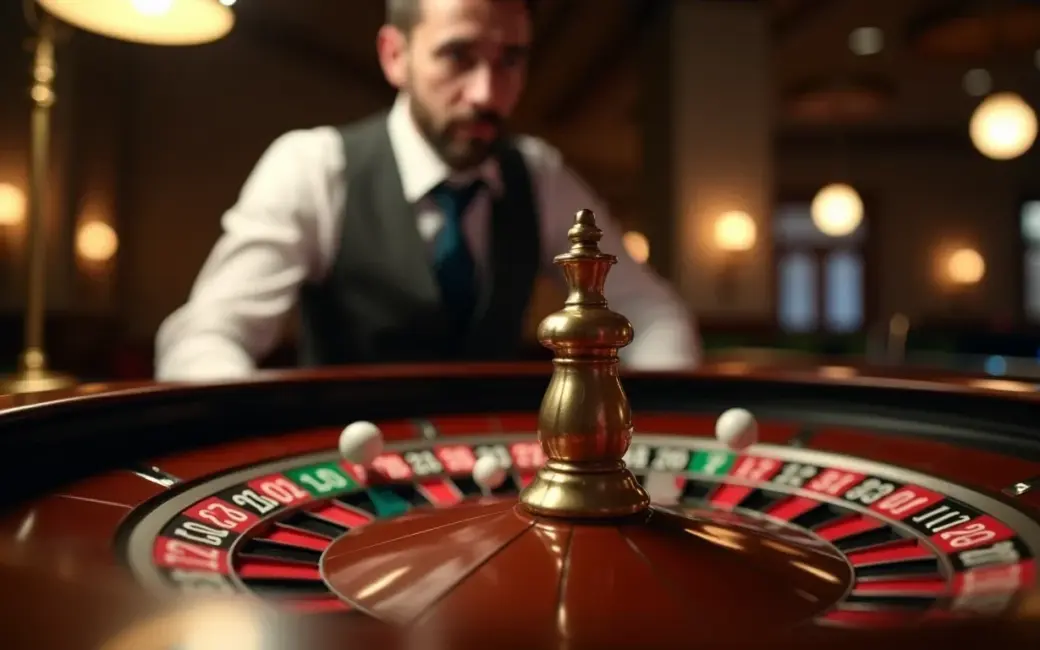
Two balls on one wheel sounds like a punter’s dream until you read the pay table. Double Ball Roulette runs a single-zero European layout with both balls in play simultaneously, and that second ball changes the economics of every wager in ways that run opposite to instinct. The format has found its way onto several live casino lobbies popular with South African players, which makes understanding the actual cost structure worth more than any novelty appeal.
How the Two-Ball Rules Rewrite Winning Conditions
The wheel keeps its 37 pockets, numbers 1 through 36 plus the solitary zero. Two balls release together, land independently, and produce two separate outcomes per spin. That independence is where the math gets interesting.
Inside bets win if either ball satisfies the condition. A straight-up wager on 17 pays out if the first ball hits 17, or the second does, or both do. You do not need both. This roughly doubles your chance of catching a single number compared to standard roulette, which explains why the payout drops from 35:1 to 17:1.
Outside bets flip the logic entirely. Red or black, odd or even, high or low, these now require both balls to land in your chosen section. Both red. Both black. Both high. The payout rises accordingly to 3:1, but the probability of hitting that dual condition collapses compared to the near-even-money comfort of traditional outside wagers.
The House Edge Reversal That Catches Punters Off Guard
Standard single-zero roulette carries a 2.7% house edge across every bet type. The risk differs, the volatility differs, but the casino’s theoretical cut stays flat. Double Ball Roulette breaks that uniformity.
Straight-up bets preserve the familiar 2.7% edge despite the halved payout. The doubled hit probability and the reduced reward balance out precisely where the mathematics expect. The casino takes its same slice, just through a different mechanism.
Outside bets tell a harsher story. Both balls landing red occurs approximately 23.7% of the time, down from 48.65% for a single ball. The 3:1 payout does not compensate adequately for that probability collapse. The house edge balloons above 5%, landing around 5.33% depending on precise configuration.
This inverts decades of roulette intuition. The wagers punters typically use to stretch a bankroll, to grind out small edges, to survive variance, these become the most expensive seats at the table. The long-shot straight-up, normally the volatility play, now offers the leaner house cut.
What R100 Actually Buys on Each Bet Type
Take a R100 chip and follow it through both structures to see the divergence in real terms.
On a straight-up number, that R100 faces the same 2.7% expected loss as standard roulette. Over sufficient spins, the casino keeps R2.70 per wager on average. The experience differs, more frequent small hits at 17:1 instead of rare large ones at 35:1, but the cost rate holds steady.
Move that same R100 to red or black. Now the expected loss more than doubles to roughly R5.33 per spin. The table effectively runs two different pricing schemes simultaneously, and the “safer” bet carries the steeper tariff. A punter switching from straight-up to even-money in search of stability would pay nearly twice the house edge for the privilege.
This pricing structure rewards careful bet selection more than standard roulette ever demanded. The player who reflexively defaults to outside wagers for conservative play faces a mathematics that punishes exactly that habit.
Why Slower Rounds Are the One Genuine Advantage
Against these stacked numbers, Double Ball Roulette offers exactly one structural benefit that works in the punter’s favour. Two balls require more time per spin. The launch mechanism, the settling of both results, the payout resolution, all extend the interval between wagers.
Fewer spins per hour means fewer total wagers per hour. At a given stake level, total hourly turnover drops, which in turn reduces total expected hourly loss even when the per-bet edge stays constant or rises. A player betting R100 per spin at sixty spins per hour exposes R6,000 to the house edge. Slow that to forty spins per hour and exposure falls to R4,000.
The pace reduction partially offsets the steeper cost for outside bettors, who would otherwise see their higher edge compound faster. It does not eliminate it, does not flip it favourable, but it trims the damage that speed would otherwise inflict.
Reading the Table Before You Sit
Double Ball Roulette presents itself as amplified excitement, two chances to win, double the action. The framing sells well in lobby thumbnails. The mathematics tell a more disciplined story.
The format suits players who understand the trade and select bets accordingly. Straight-up wagers at preserved 2.7% edge with more frequent hits offer a legitimate alternative to standard roulette, different volatility profile, same cost rate. Outside bettors face a harder proposition than any standard single-zero table offers, and the 3:1 payout is not the compensation it appears.
The slower pace is not a minor footnote. It is the single mechanism that prevents the format from being uniformly worse for player bankrolls, and it operates regardless of bet selection. Combined with straight-up play, it produces a session cost that can undercut faster standard tables. Combined with heavy outside betting, it merely softens a still-punishing edge.
Punters browsing Goldrush Morula’s live casino selection should treat Double Ball Roulette as a distinct product with its own price list, not an enhanced version of the familiar game. The two balls change everything, including which bets deserve your money.





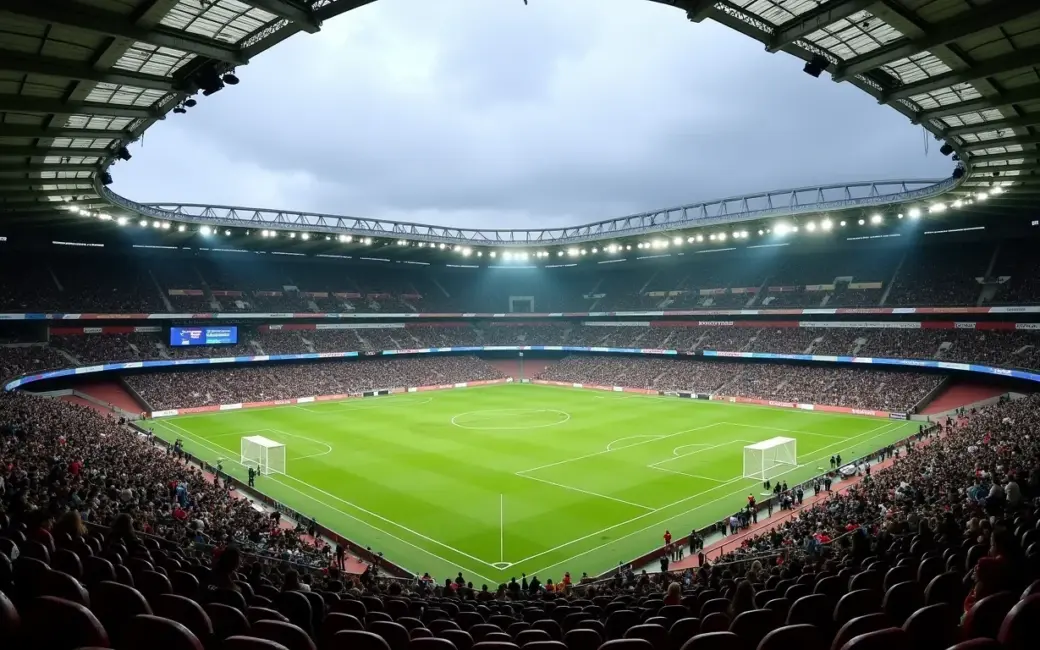

 Watch Every Moment, Bet Every Play

 Goldrush Morula turns every rugby fixture into an opportunity to win. It’s more than a place to place a bet. Whether it’s your regular weekend routine or a one-off shot at glory, the atmosphere here is undeniable.

 At 14:30, the Griquas go head-to-head with a sharp and hungry Cheetahs XV. A match loaded with tension and high-stakes ambition. Then, at 17:00, it’s the Gauteng pride of the Lions up against a Boland Kavaliers team who’ve built a season on proving people wrong.

 From 11 to 15 September, the world’s golfing elite face off at the legendary Wentworth Club, but the real move is happening here at home. Our “Pick a Winner” promo gives you the chance to turn a smart prediction into a pocket win.

 Goldrush Morula is stepping into full gear for match night, inviting fans to experience the passion of football paired with the pulse of real-time play. More than just a casino, we’re a home for local fans who know that football isn’t just a game, it’s a way of life.

 Here’s why Morula is lit this Tuesday:

 Three matches. Three chances to rewrite history. The series kicks off on Wednesday 10 September at 19:30, followed by another primetime showdown on Friday, and a thrilling finale on Sunday at 15:30. You already know the stakes. Now it’s time to play your part.

 Every second Saturday, as well as the final Saturday of the month, the action hits its peak at 8PM sharp. That’s when the Rush for Gold draw kicks off, and the room turns electric. Tickets are drawn live from three clearly marked boxes, Gold, Platinum, and Black. Each ticket must be placed in the correct box to be eligible, so attention to detail is crucial.

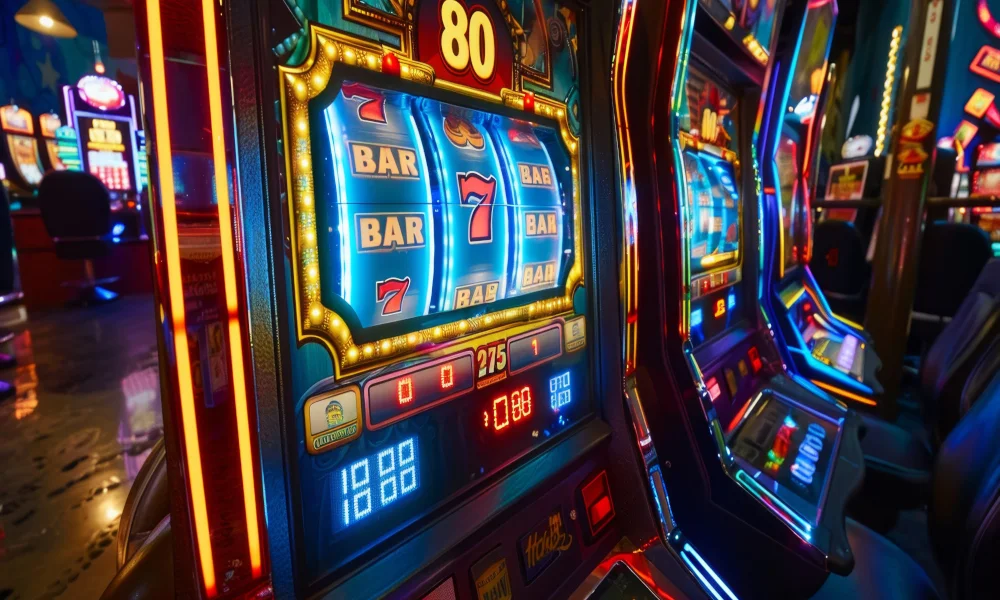
 At Goldrush Morula, the atmosphere is always buzzing, from locals testing their luck on our fast-paced Electronic Bingo Terminals (EBTs) to the cheers that go up every time the Boks hit the field. Our venue is clean, secure, and designed to deliver the thrill of the game in every visit. Whether you’re placing your bet ahead of kick-off or watching the action unfold in real-time, Morula is the place to be.

 Located in Mabopane, Goldrush Morula stands as a landmark for local gaming and entertainment. With a heritage rooted in the community and a venue packed with action, from high-energy EBT machines to an active sports betting area, it’s where precision meets opportunity.

 A Space Built for Players

 Entertainment at Your Fingertips

 New Bonuses Now Available In-Store!